As the 2026 Winter Olympics begin, Alfred community member FireFingers21 has created a workflow we can all use to keep track of the Olympics' schedule, standings and stats.
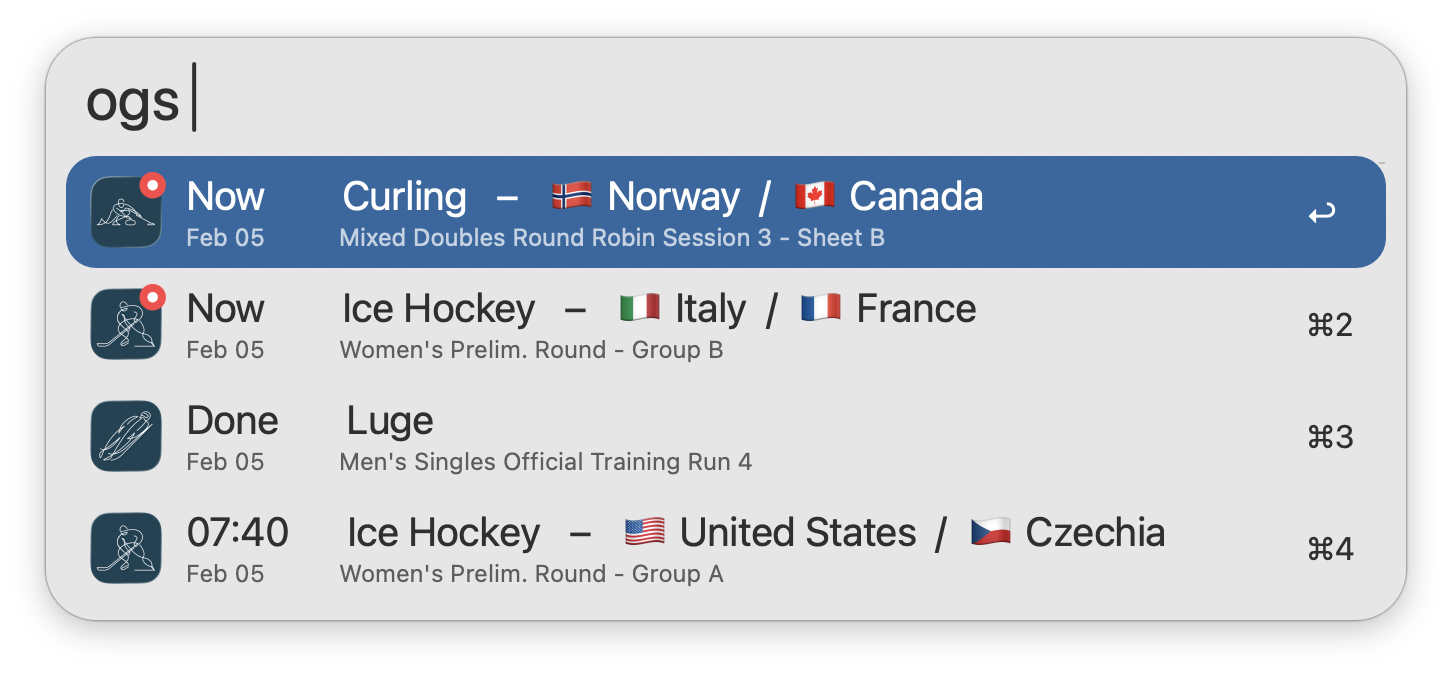
The official opening ceremony is held on Friday, 6th February, with athletes from more than 90 countries competing on snow and ice over the next two weeks in Milan and Cortina.
Download the Olympic Standings and Stats workflow from the Alfred Gallery.
Use the keyword ogs to view the schedule adjusted to your local time zone. Type to filter by Sport, Country, Event, or Date.
FireFingers21 adds his own Olympian trivia:
"The Athens 2004 Summer Olympics were the first Olympic Games to be broadcast live over the Internet, in which streaming video and highlight clips were made available through mobile phones using 3G.
Now just over 20 years later, 8K streams have been made available and viewable over 5G, while key information can be conveniently glimpsed from an Alfred window on a Mac!"
Which sports will you be watching this winter?
Why not check out some of our other sports statistics workflows, like the football Premier League Stats, basketball NBA Scores and hockey NHL Stats workflows?

What better way to wrap up 2025 than receiving the prestigious MacStories Readers' Choice award!
MacStories is a longstanding and reliable source of coverage for all things Apple, so it was great to hear a few days ago that MacStories members chose Alfred as their favourite app of the year!
We hope you've had an incredible and productive 2025. We've been hard at work this year, supporting the brilliant community of workflow creators, and quietly working on some very exciting upcoming Alfred updates.
We can't wait to share these updates with you in the new year. Until then, Andrew, Vítor and I (Vero) wish you a joyful festive season!
This is a three-part series on Alfred's Automation Tasks workflow object.
In the first part, we created a workflow to quit all apps except some pre-defined ones, allowing you to quickly create a focused work environment.
In the second post, we used an Automation Task to capture text from an image and copy it to Alfred's clipboard.
With 231 Automation Tasks at your fingertips and more being added regularly, you can create powerful workflows with no need to know how to script or code anything!
In this third and final post, we'll learn how to merge images into a PDF document using Alfred, with two different ways to use the workflow.
Two ways to trigger the workflow
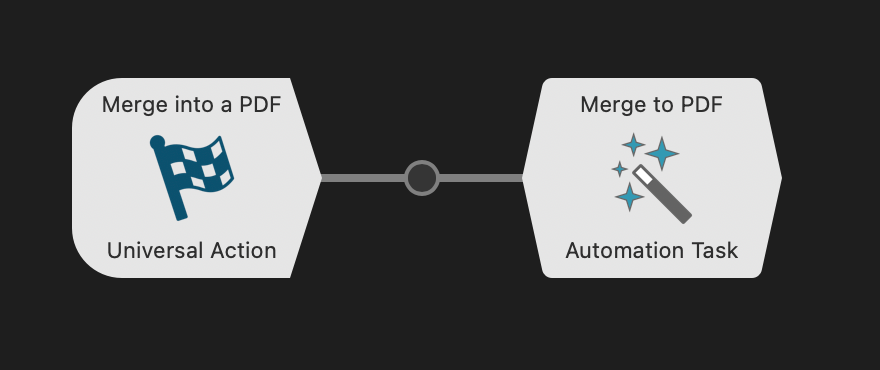
When using this workflow, we need to select our images first, then trigger the creation of a PDF file. To achieve this, we'll create the first path by connecting a Universal Action Trigger to the Automation Task object.
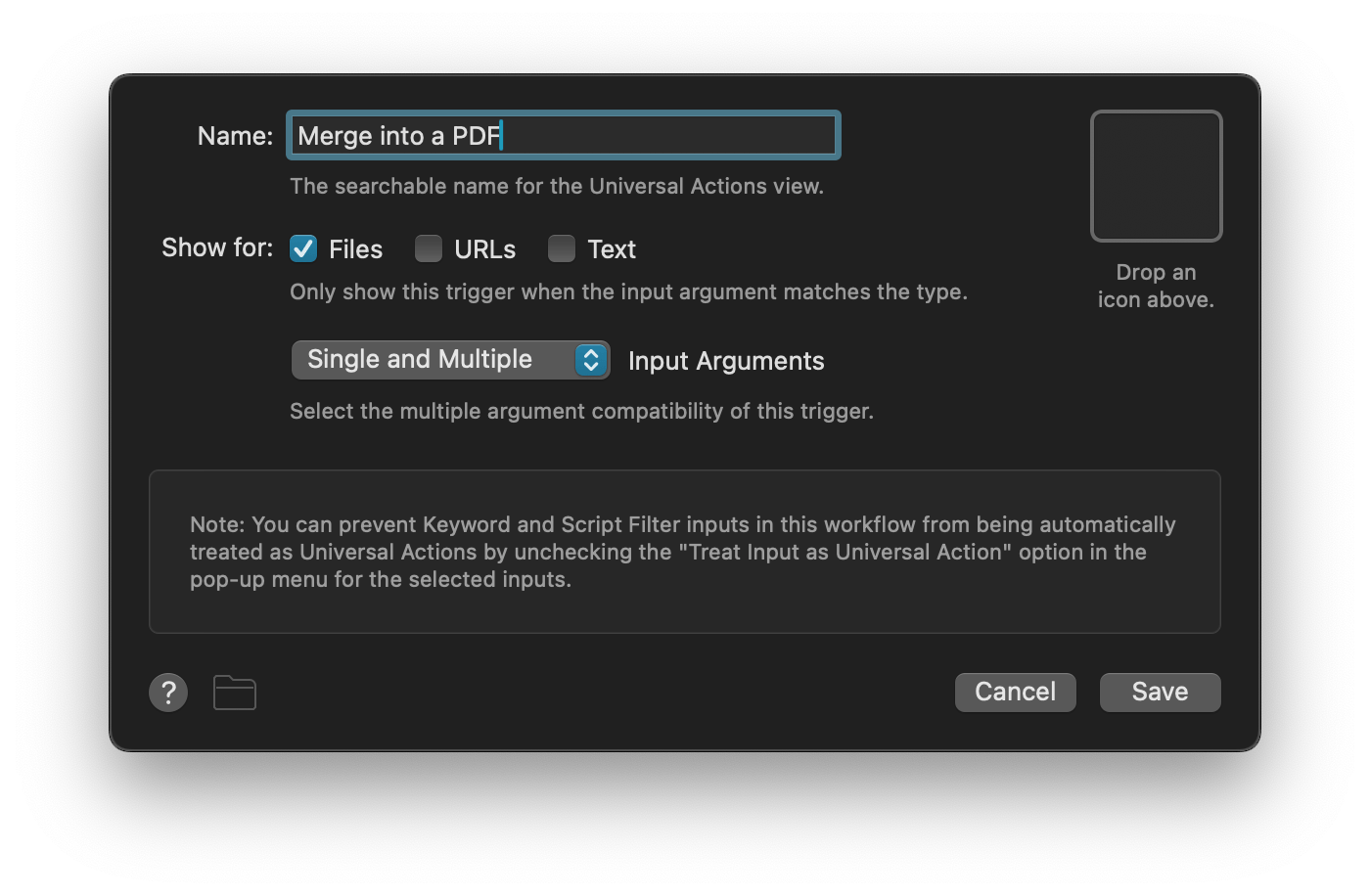
The Universal Action is configured with:
- Name: Merge into a PDF
- Show only when Files are selected
- Accept single and multiple arguments (files) at once
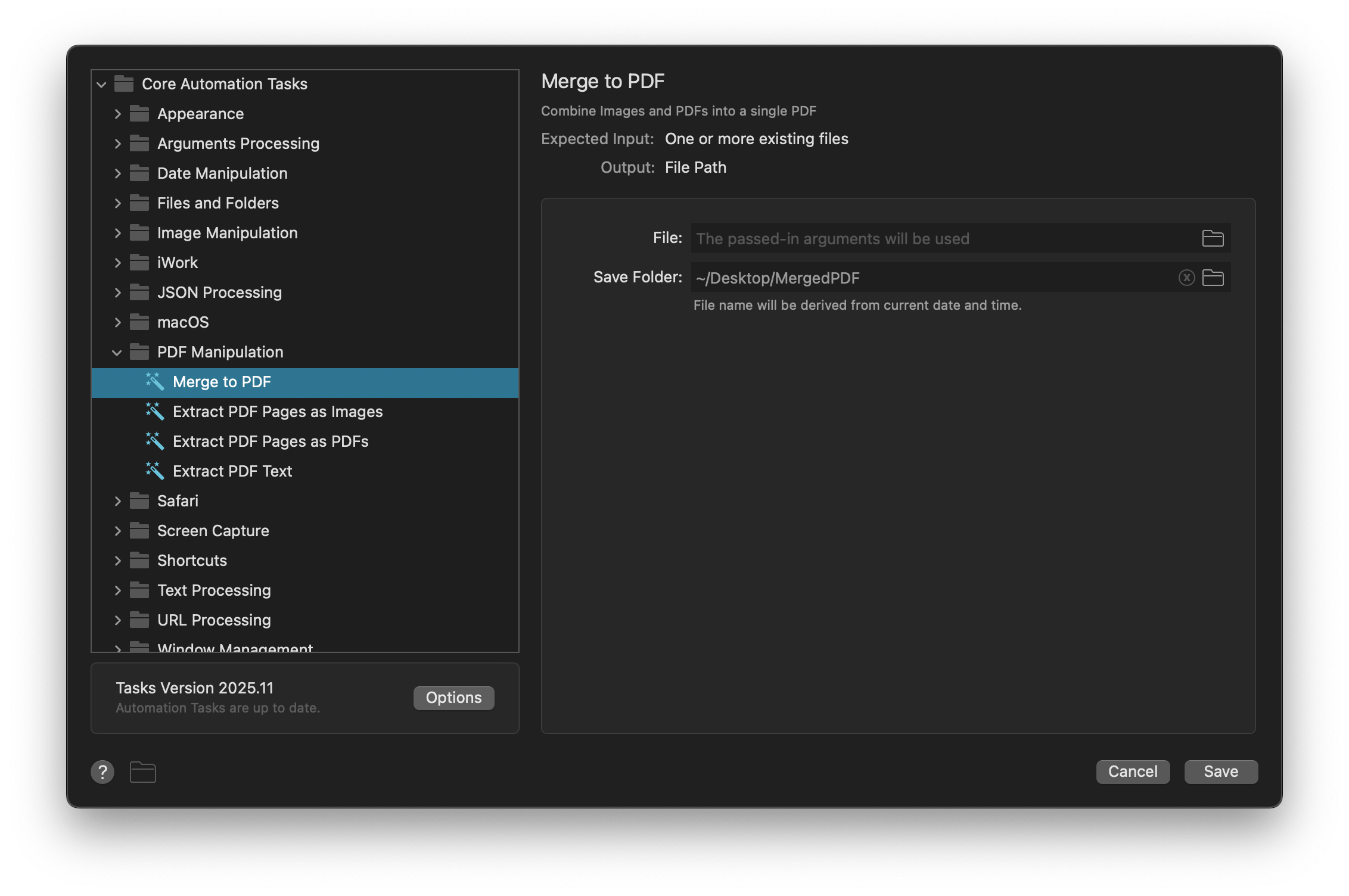
For the Automation Task, we'll choose the task Merge to PDF from Core Automation Tasks > PDF Manipulation.
We need to configure the folder where the created PFDs will be stored; In this case, I opted for a MergedPDF folder on the Desktop.
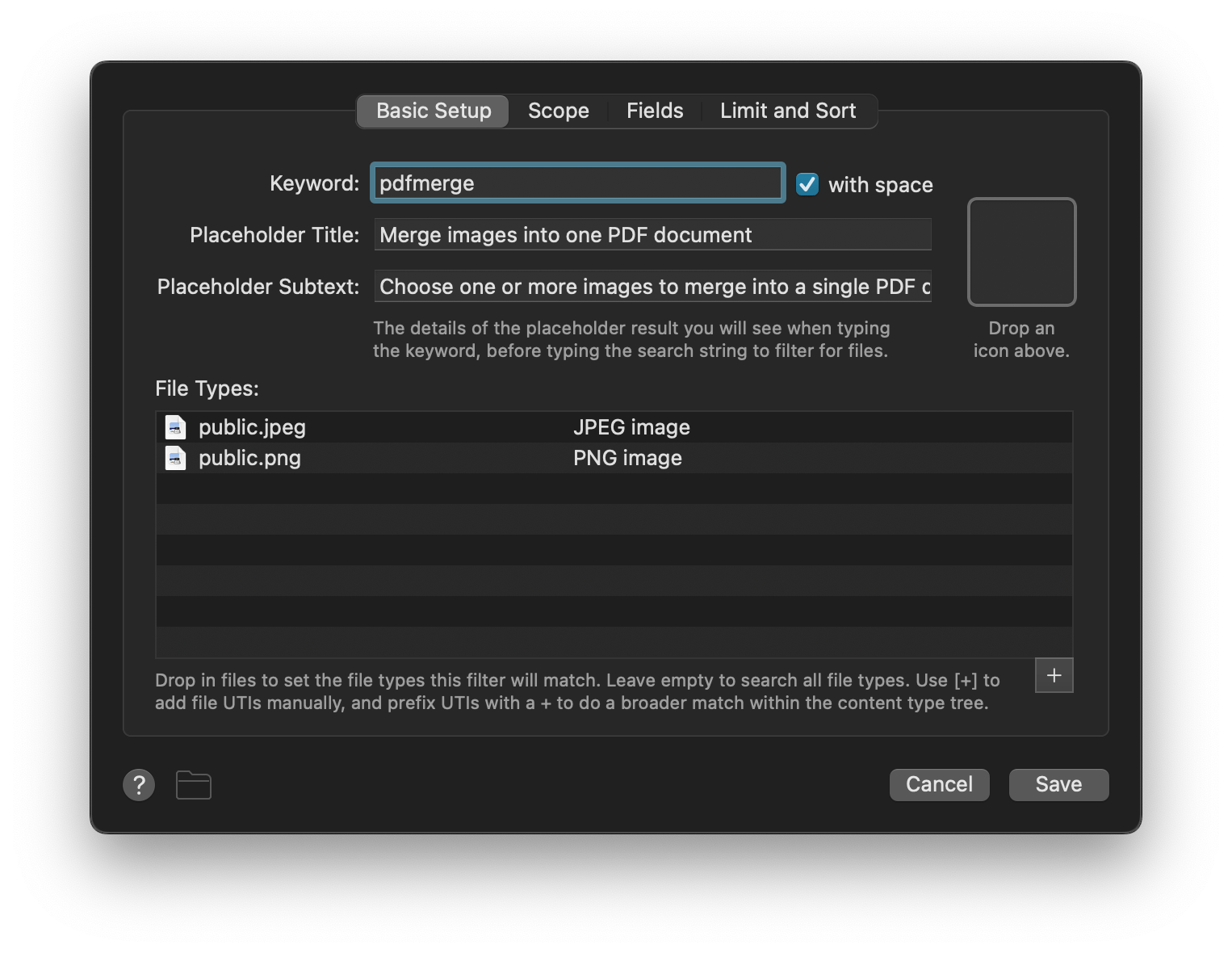
Next, let's add a second way to send files to this Automation Task; A File Filter object, which is configured with:
- The keyword
pdfmerge
- A placeholder title and subtext
- File types for JPEG and PNG images, dragged in from Finder or Alfred results
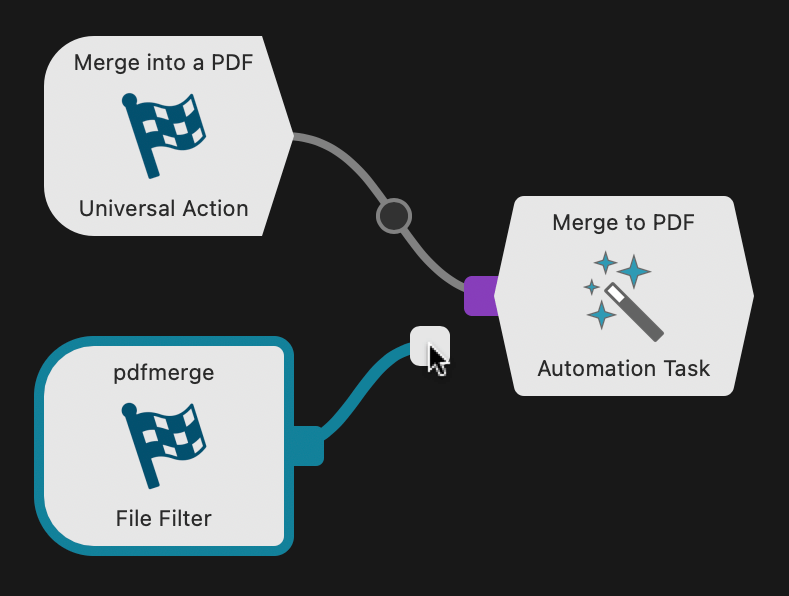
The File Filter connects as an input into the Automation Task.
A Quick Trick: Adding multiple files with the File Buffer
When browsing Alfred's results, you can use ⌥↑ (Alt + the up or down arrow) to add files to the File Buffer at the top of Alfred's search bar.
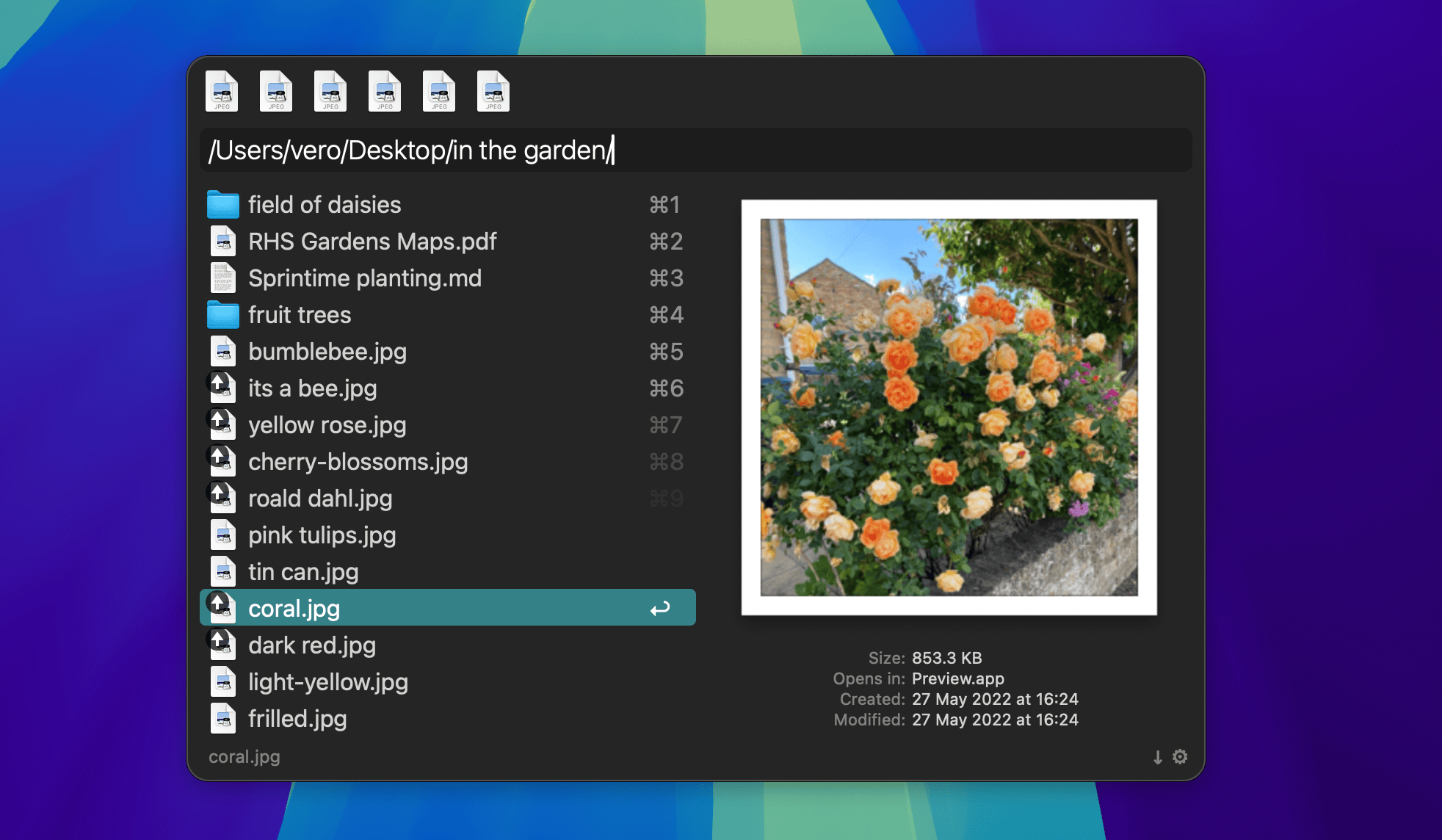
Use ⌥↩ (Alt + Return) to take action on all results at once, or ⌥→ (Alt + right arrow) to show the Universal Actions for the Buffer results.
Add a little more convenience
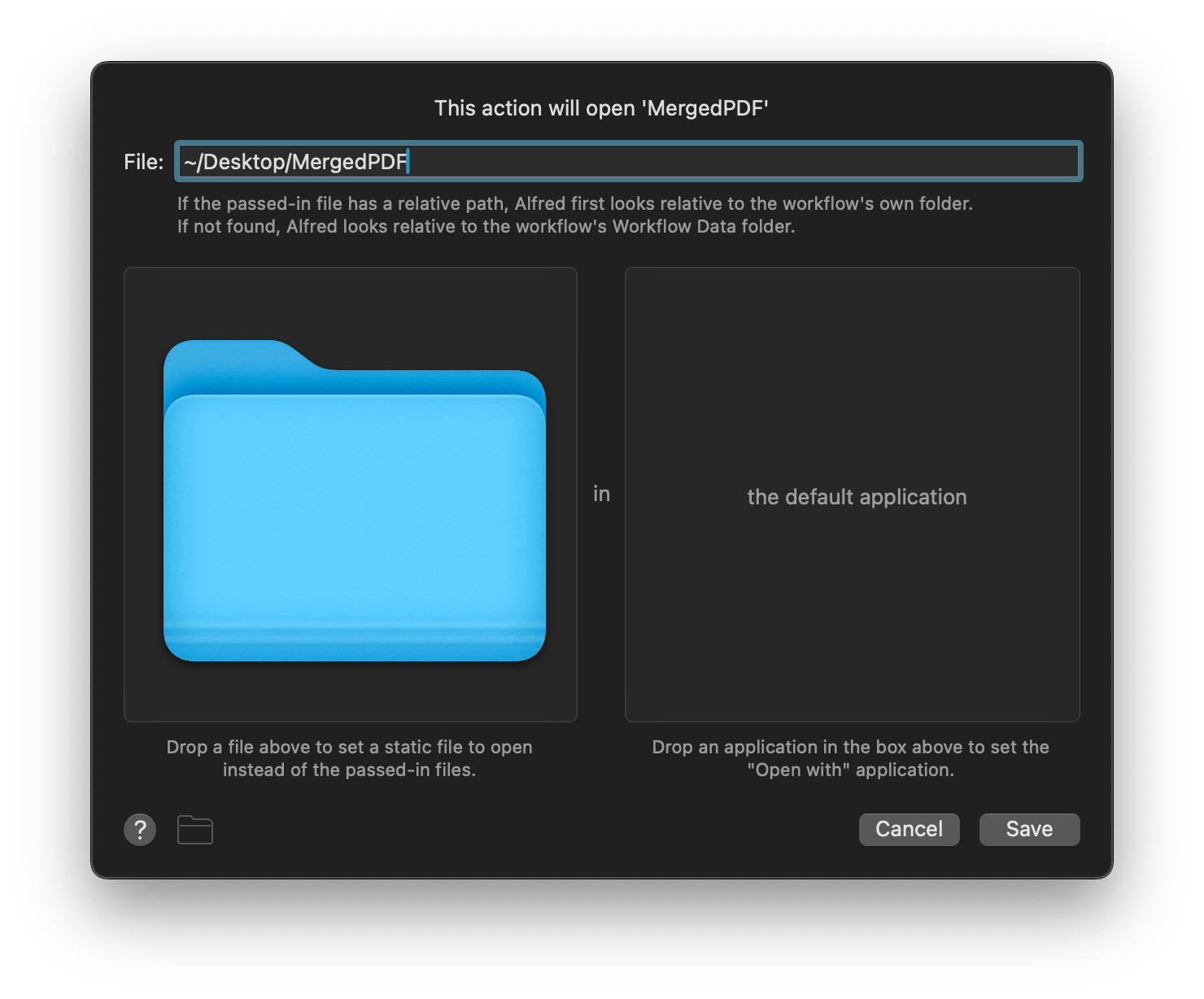
It's great that our workflow can now generate these PDFs, but it'd be even better if it automatically opened the folder containing our generated PDFs in Finder for instant access.
Add an Open File Action at the end of your workflow, configured to open the ~/Desktop/MergedPDF/ folder in Finder.
Our finished workflow
And finally, we can admire our succinct but very useful workflow.
It can be launched in two ways:
- Select files in Finder and use the Universal Action hotkey, which is ⌘/ by default
- Find one or more files via the File Filter, optionally add them to the File Buffer, and use the right arrow to show the Universal Actions
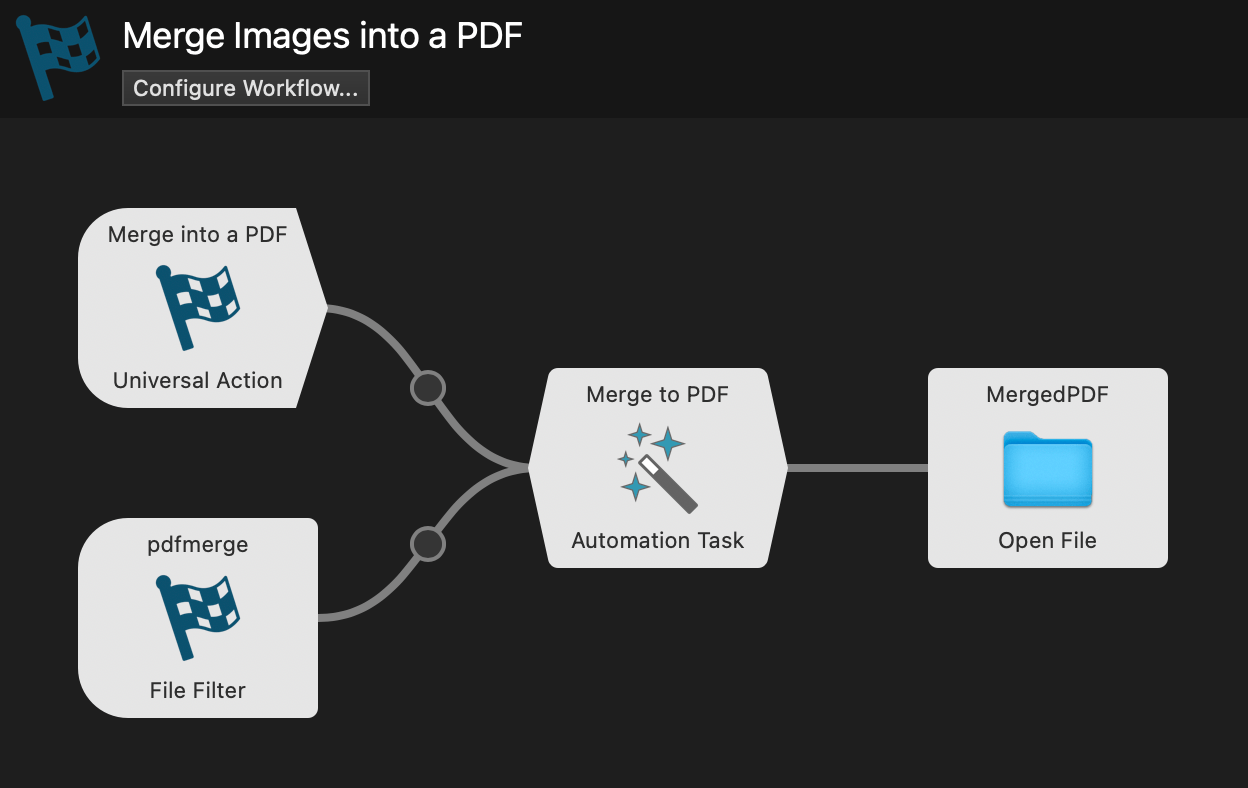
Let us know what you'd like to learn about Automation Tasks next time on the Alfred Forum and share your own workflow creations with us.
This is a three-part series on Alfred's Automation Tasks workflow object.
In the first part, we created a workflow to quit all apps except some pre-defined ones, allowing you to quickly create a focused work environment.
With 231 Automation Tasks at your fingertips and more being added regularly, you can create powerful workflows with no need to know how to script or code anything!
In this second part, we'll create a workflow using the "OCR Image" Automation Task.
What's OCR? Optical Character Recognition is the process that converts the text found in an image into a machine-readable text format. In other words, the Automation Task will identify text in an image and copy it to Alfred's Clipboard, so that you can use it somewhere else.
Setting up the OCR workflow basics
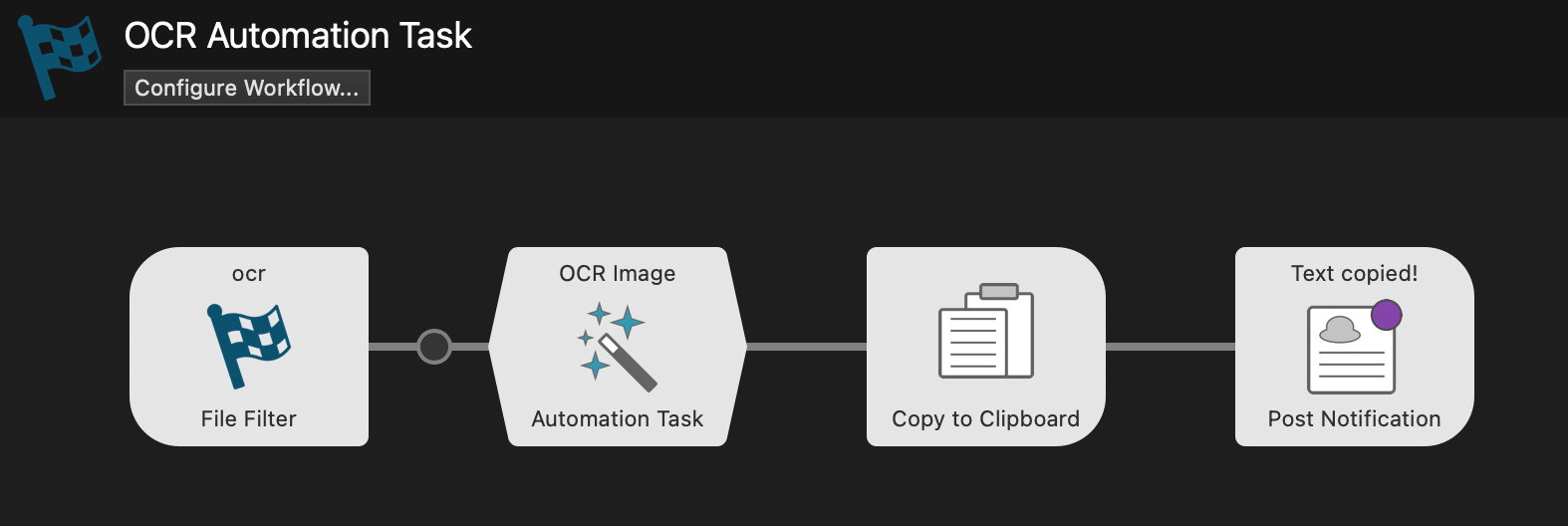
The File Filter Input and Automation Task object are the first two objects to connect; We'll add two more useful objects to the workflow later.
The File Filter is configured with:
- The keyword
ocr
- A placeholder title and subtext of your choice
- File types PNG and JPEG: Drag in files of relevant types from Finder or Alfred's results
All other File Filter settings have been left to defaults, though you can limit the scope (which folders you want to search) or set a date range if you'd like to narrow down your results.
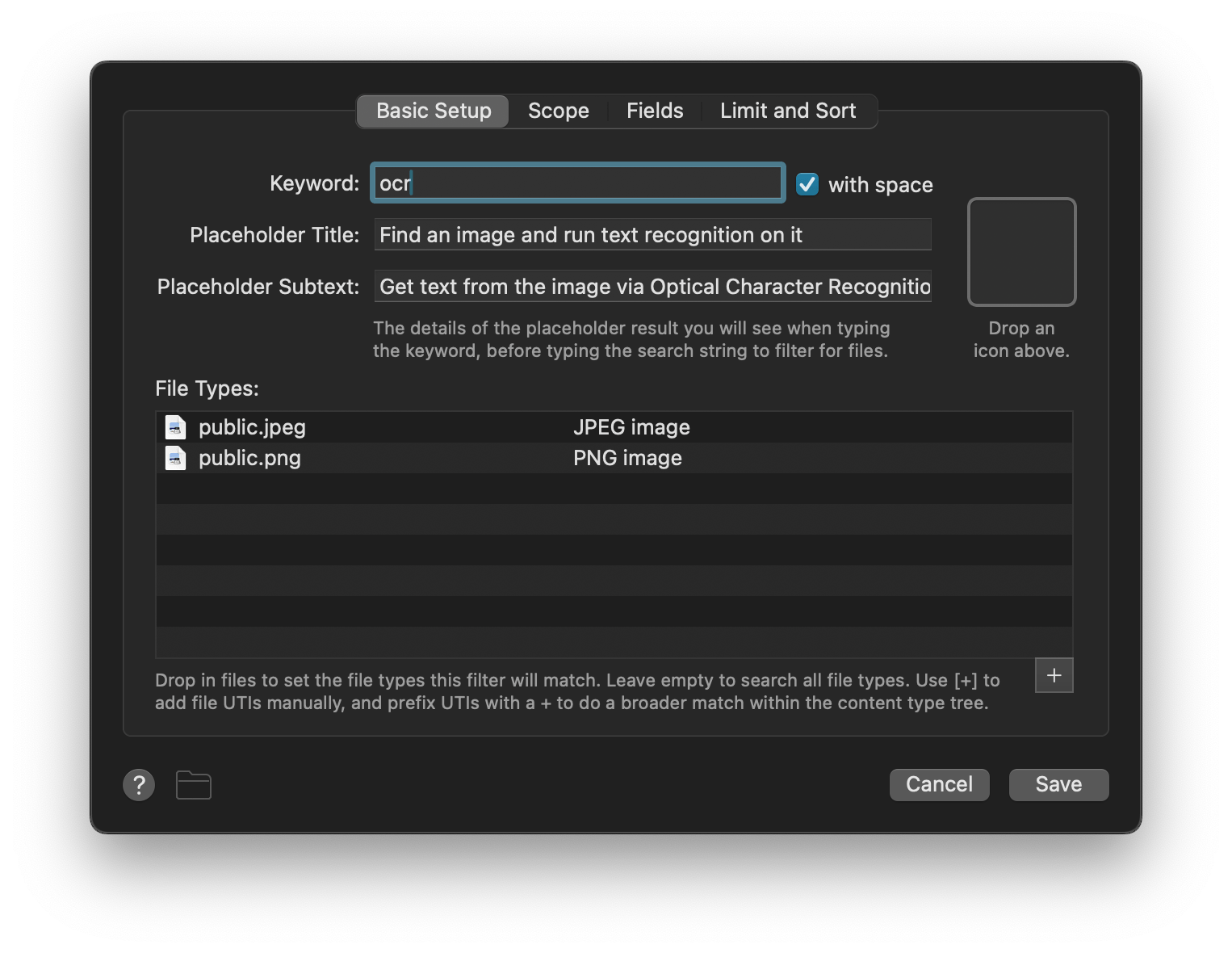
The File Filter is connected to an Automation Task object, where we'll select the OCR Image task from Core Automation Tasks > Image Manipulation section.
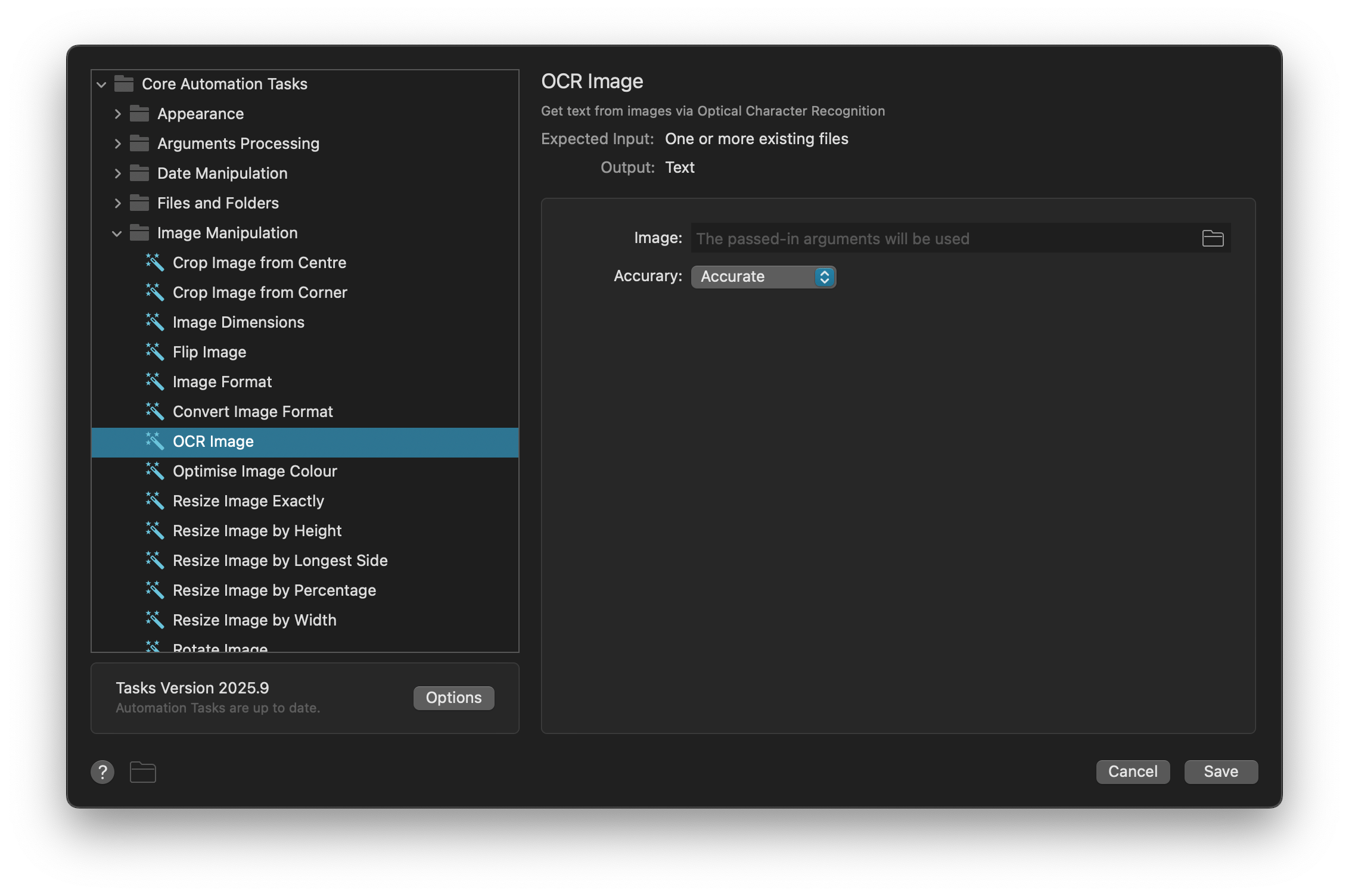
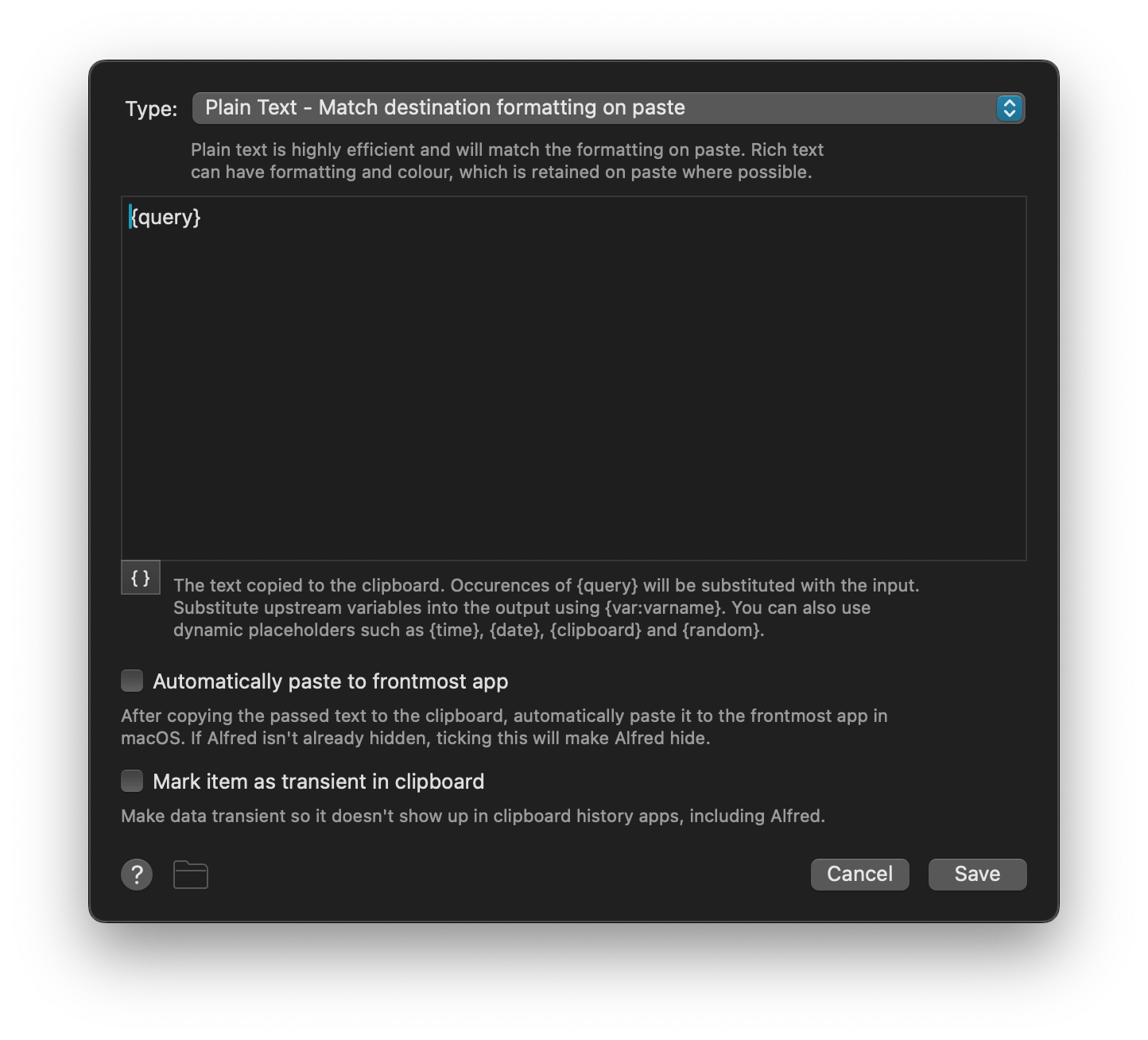
Our workflow is now functional; We can find an image file and process it with the OCR Image Automation Task... but we need to do something with the text found in the image, known as the query, so we connect a Copy to Clipboard Output to use it.
This query can be pasted to the frontmost app by checking the relevant box in the preferences, or prefixed/appended with additional text.
Finally, we'll add a Post Notification Output to let us know once the OCR task has completed, and show us the captured text.
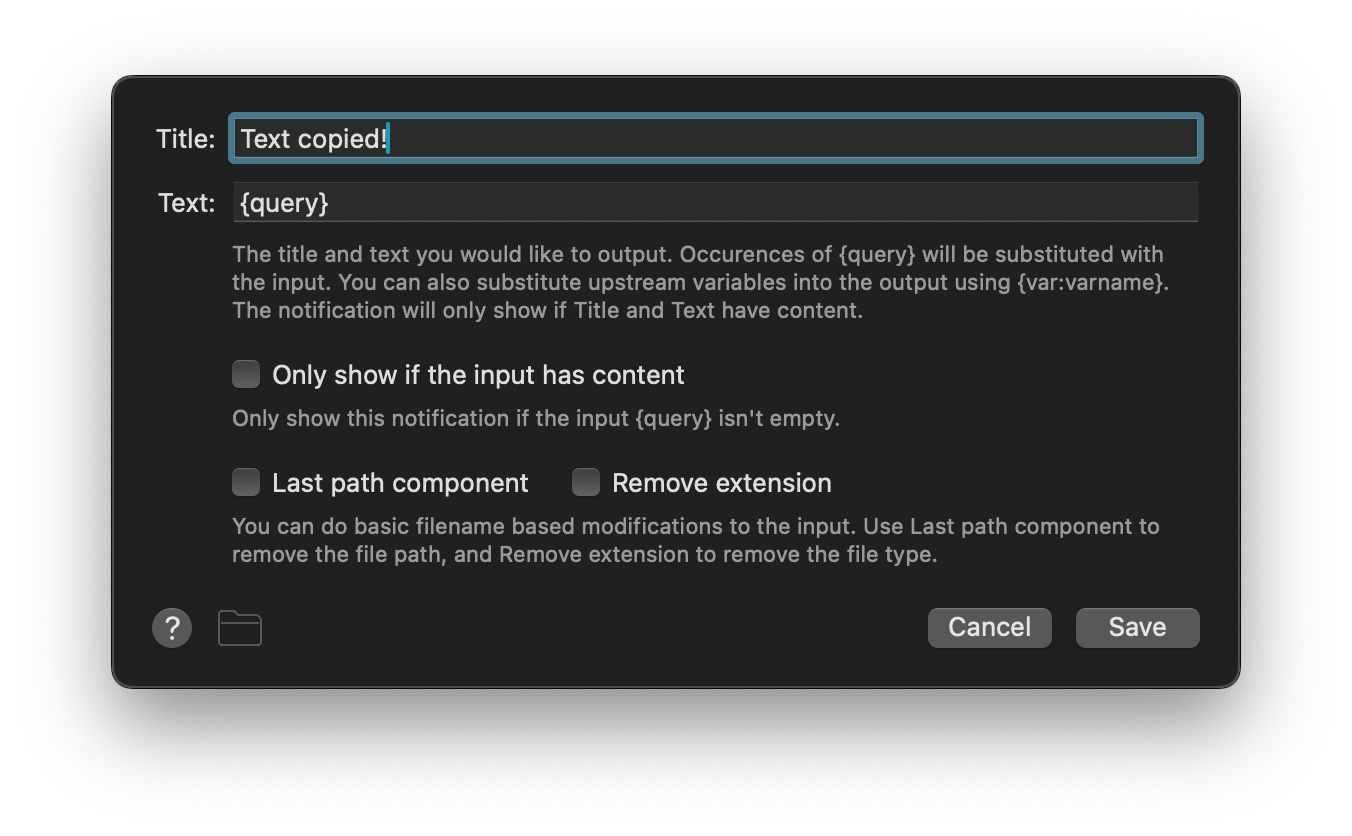
Our workflow should now look like this:
Testing the OCR workflow for text recognition
Now that the workflow objects have been configured, let's test the workflow.
As a sample file, we'll use an image from the beautiful children's book "Zoom" by Sha'an D'Anthes.

Using the ocr File Filter keyword followed by the file name, we can select the image file.
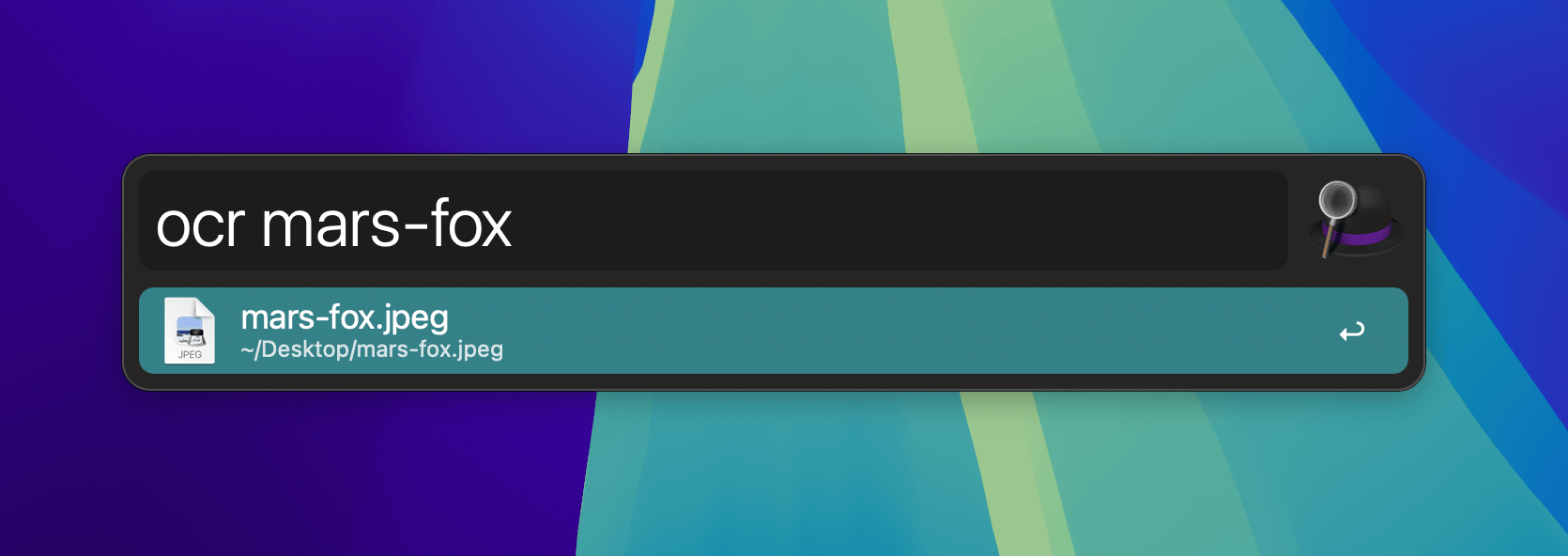
Immediately, the Automation Task processes the image content, copies the found text to the Clipboard and pops up a post notification with the text:
"Scout smiled at little red Mars,
and little red Mars smiled right back."

Other ways to use the OCR Output
There are so many ways you could use the output from the OCR workflow; Trigger an email, add it to an existing text file, pass it to another workflow object to search the web or internal documentation.
What's next? Take a look at our third guide which shows you how to use Automation Tasks to merge images into a PDF file.
Alfred's Automation Tasks are the non-coder's secret weapon.
With 231 Automation Tasks at your fingertips and more being added regularly, you can create powerful workflows with little to no need to know how to script or code anything!
We've created a series of 3 posts to help you discover a few of the ways you could use Automation Tasks as building blocks to speed up your work.
Completely new to workflows?
Take a look at our Getting Started Guides, which will show you how to connect, configure and use workflow objects, the canvas and palette.
In this first post, we'll create a workflow to quit all apps on your Mac except for a few select ones. This is a great way to quickly settle into a focused work environment by quitting all unnecessary distractions.
Setting up your workflow
This workflow consists of only two objects; A Keyword Input and an Automation Task.
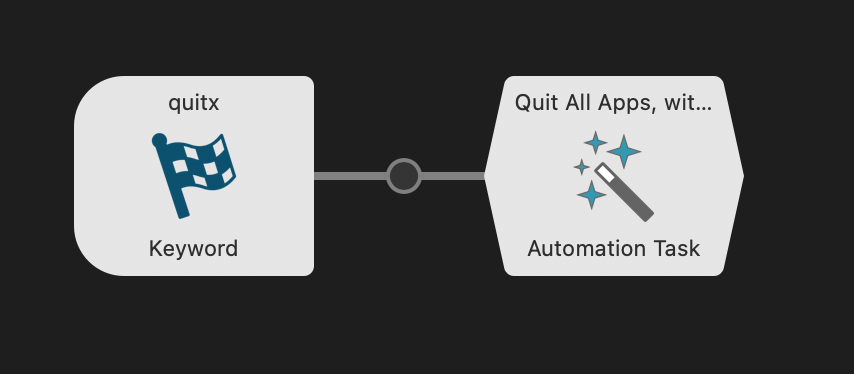
The Keyword object is configured with:
- The keyword
quitx
- The Argument dropdown is set to No Argument
- A Title: Quit all apps except Safari and Mail
- Optional subtext for clarity (or alternative actions, more on that later)
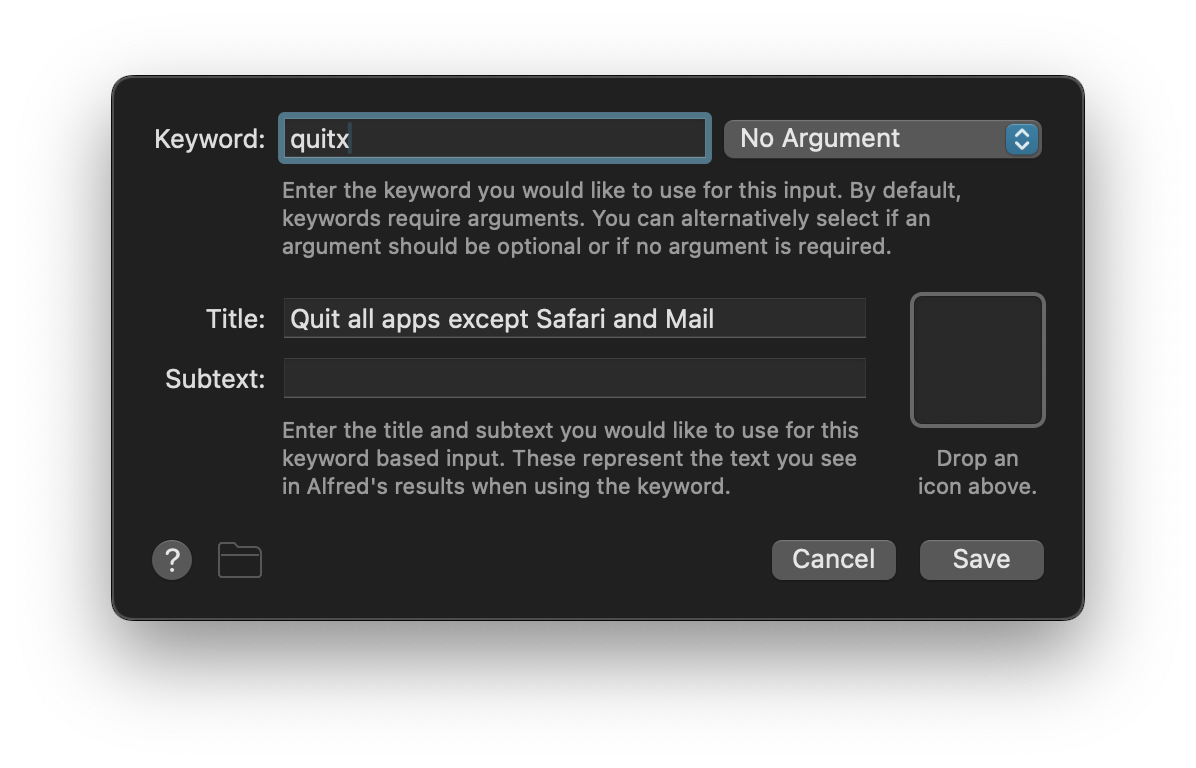
For the Automation Task, we'll select the task Quit All Apps, with Exceptions from Core Automation Tasks > macOS.
In this example, we'll keep Safari and Mail open by typing their app names in. We'll also ensure that Alfred and Finder are checked so that they continue to run in the background.
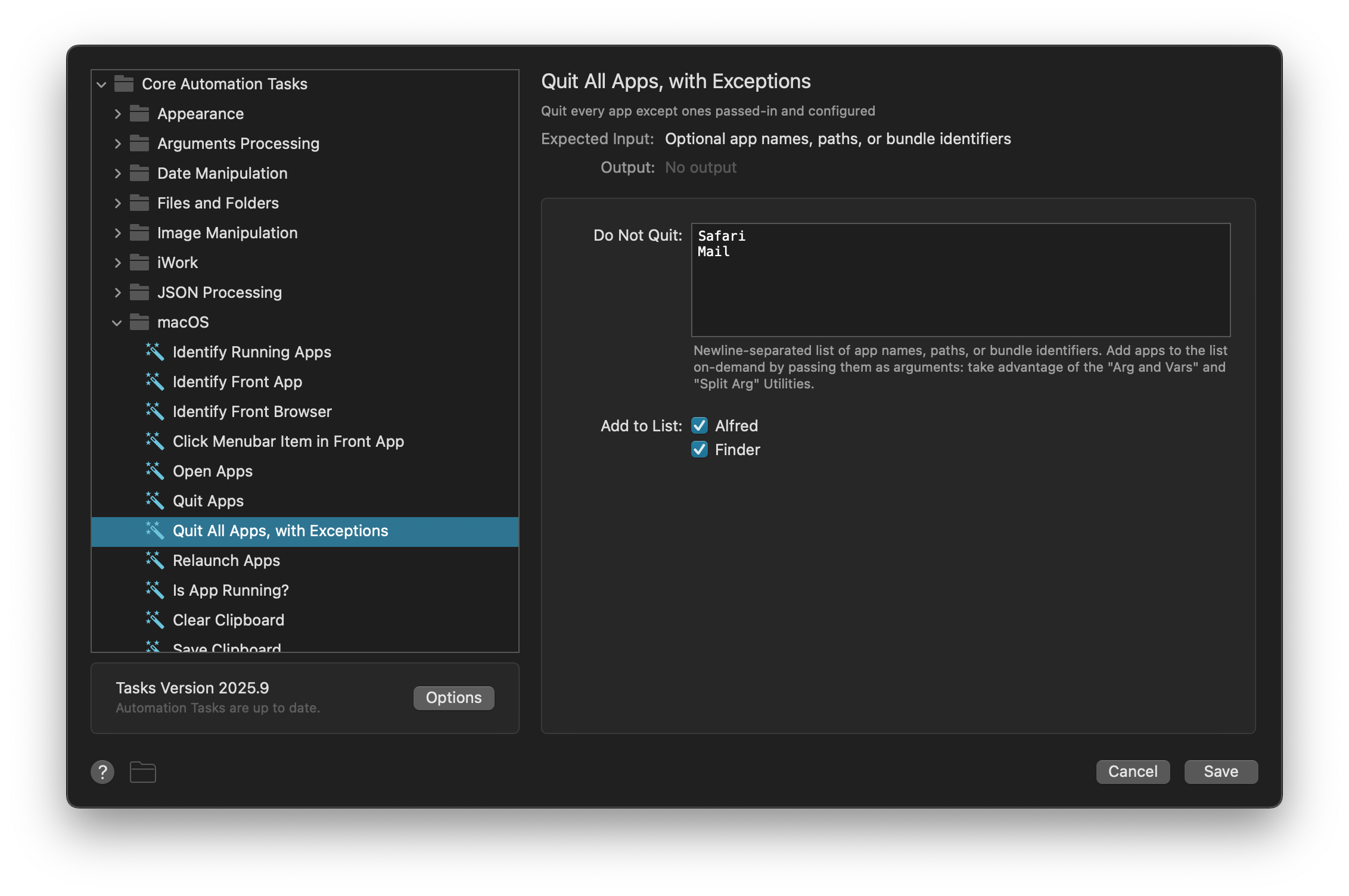
Customisation Tip:
You can add different apps to the "Do Not Quit" list to suit your preferred work habits.
We can now test the workflow by typing quitx into Alfred to trigger the workflow.
Adding an Alternative Action: Leisure Mode
Life isn't just about work, right? To wrap up this workflow, we'll add an alternative action to the same keyword.
Connect a second Automation Task from the Keyword object; We'll set this AT to use the Quit Apps task from Core Automation Tasks > macOS, and set the app names that relate to work, such as XCode and Slack.
Set an alternative action by double-clicking the circle halfway down the connection between the Keyword and second Automation Task. This brings up a configuration panel for the connection.
We'll choose ⌥ as our modifier key, and set the Subtext to "Leisure mode activated!"
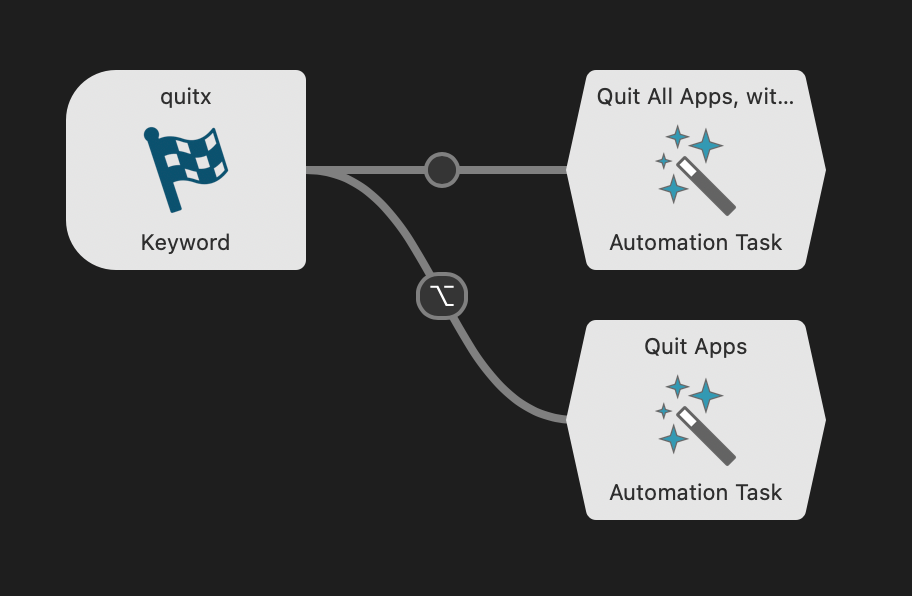
After saving your change, pop up Alfred, type quitx but instead of just pressing ↩ (Return), hold the ⌥ key first. You'll notice the subtext changes to our alternative path. Pressing ↩ while holding ⌥ will trigger this alternative path and quit all your work apps.
That's it, you've created a workflow with two Automation Tasks!
What's next? Take a look at how to extract text from an image with OCR text recognition.
In the third post from this series, you can learn to use Automation Tasks to merge images into a PDF file.